Advanced Huntington’s Disease Care: A Specialist Guide to Neuro-Palliative Support
Reaching the advanced stages of Huntington's disease brings unique challenges, requiring a specialised level of clinical and emotional support to safely navigate changes in physical and cognitive health. At this stage, care shifts from managing individual symptoms toward a coordinated neuro-palliative approach, one that combines symptom management, therapeutic input and emotional support rather than treating each need in isolation. Specialist neuro-palliative care matters here because advanced Huntington's disease rarely presents a single, manageable problem. It presents overlapping motor, nutritional, cognitive and psychological needs that require a clinical team experienced in progressive neurological conditions, not a generalist care setting adapting as it goes.
For families researching options, and for hospital discharge teams, case managers and social workers assessing next steps for a patient, understanding what a genuine neuro-palliative care pathway looks like, and how it differs from standard nursing or residential care, is the starting point for making the right decision.
The Clinical Pathway for Advanced Huntington's Disease Care
A structured care pathway for advanced Huntington's disease draws on several strands of national clinical guidance rather than a single document. NICE guideline NG142 on end-of-life care for adults sets out that people with a progressive condition should have their preferences and needs identified and recorded early, with care coordinated across services rather than delivered reactively as the condition advances. Alongside this, NICE guidance CG32 on nutritional support for adults, covering oral nutrition, enteral tube feeding and parenteral nutrition, is directly relevant once swallowing difficulty becomes a feature of the disease, as it commonly does in advanced HD. Together, these underline that a genuine Huntington's disease care pathway is not just about symptom control at the end of life, it is about early identification of risk and coordinated planning across nutrition, mobility, cognition and mood.
At Dee View Court, this translates into a referral and assessment process where Clinical Assessors carry out a prompt assessment following referral, working with the individual, their family and the wider professional team to ensure continuity of care from the point of referral through to admission. This matters as much for discharge teams and case managers as it does for families, since a coordinated neuro-palliative care pathway reduces the risk of disjointed transitions between hospital, community and residential settings.
Therapies and Clinical Interventions Used in Neuro-Palliative Care
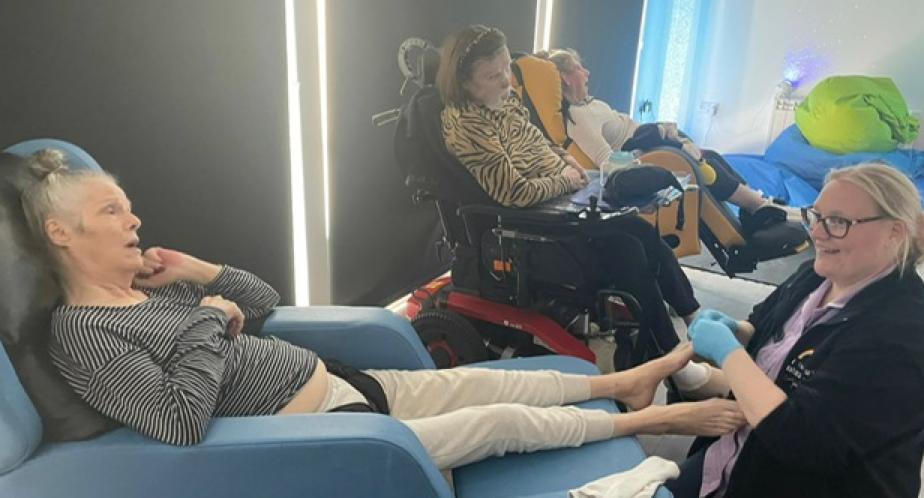
Neuro-palliative care rehabilitation at Dee View Court combines medical, therapeutic and emotional support as one coordinated offer, rather than treating rehabilitation and palliative care as separate tracks. Physiotherapy is used to support mobility and comfort, while occupational therapy helps residents adapt daily routines as function changes. This is delivered by an in-house multidisciplinary team that also includes recreational therapy, and residents are able to invite personal therapists into the home to maintain continuity and familiarity where that matters to them. For those with more complex needs, including advanced disability management, the clinical team also delivers complex wound management, enteral nutrition and postural management, alongside structured plans for cognitive and behavioural symptoms, all built into a personalised care plan for advanced Huntington's disease rather than delivered as standalone interventions.
Managing Swallowing Decline and Nutritional Risk
One of the most clinically significant functional challenges in advanced Huntington's disease is progressive dysphagia, alongside involuntary movement that increases the risk of aspiration and unintentional weight loss. As swallowing safety declines, a Huntington's disease care plan needs to account for changing food and fluid consistency, close monitoring of nutritional intake, and a clear, clinically led decision process around enteral feeding where oral intake is no longer safe or sufficient. Dee View Court's clinical team manages PEG feeding as part of its complex disability and neuro-palliative care pathway, working alongside families and specialist consultants to review nutritional status regularly rather than waiting for a crisis to prompt a change in approach. Getting this right is often what protects both comfort and safety in the later stages of the disease, since poorly managed nutritional decline is one of the more common drivers of hospital admission in advanced neurodegenerative conditions.
Family Involvement Throughout the Care Journey
Huntington's disease is a familial condition, and families are rarely approaching a neuro-palliative care decision without their own history of the disease and its impact. Families at Dee View Court are involved throughout the care journey, from initial care planning through to ongoing reviews, with clear communication and a welcoming environment that allows loved ones to remain actively involved in day-to-day life and in care decisions as the condition progresses. This continued involvement, rather than a handover of full responsibility, is often what families say matters most once a decision has been made to move into specialist neurological care.
Staff Training and Clinical Credibility
The strength of any neuro-palliative care pathway depends on the depth of experience behind it. The service’s clinical leadership structure brings together dedicated clinical team leads and a strategic service director, supported by a specialised practice educator. This dedicated training role ensures a continuous investment in staff skills and clinical development, moving far beyond a standard, one-off induction model. The wider multidisciplinary team works closely with GPs, specialist consultants and community-based palliative care services to review care regularly and adapt it as a resident's condition changes. Families and referrers considering Dee View Court can review its published Duty of Candour report directly as part of their own due diligence.

Choosing a Specialist Neurological Care Centre Over a General Nursing Home
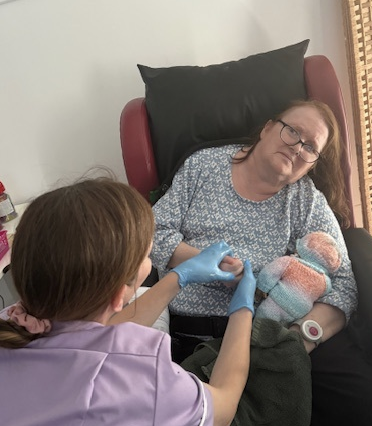
Not every nursing home that accepts residents with neurological conditions is built around them. A general nursing home may offer registered nursing care and a physical disability specialism, but a purpose-built neurological care centre is structured differently from the ground up, with an environment, staffing model and therapy provision designed specifically for conditions like Huntington's disease, Motor Neurone Disease and Multiple Sclerosis rather than adapted for them. Dee View Court is Aberdeen's only purpose-built specialist neurological care centre, supporting adults aged 16 and above with high-acuity neurological needs, backed by 24-hour specialist nursing and an in-house multidisciplinary therapy team. For families comparing local options, or referrers weighing up whether a general placement or a specialist neurological pathway is the more appropriate fit, this distinction, purpose-built versus adapted, is often the one that matters most for long-term outcomes.
Frequently Asked Questions
What is neuro-palliative care for Huntington's disease?
Neuro-palliative care combines symptom management, therapeutic support and emotional care for people with progressive neurological conditions such as advanced Huntington's disease. It focuses on comfort, dignity and function rather than being limited to end of life support alone.
When should a family consider a specialist neurological care pathway for Huntington's disease?
This is usually the right time when swallowing safety, mobility or cognitive and behavioural symptoms exceed what home-based or general residential care can safely manage. A referral and clinical assessment process typically follows, in line with the coordinated approach set out in NICE end of life care guidance.
What therapies are included in a Huntington's disease care plan?
A specialist care plan may include physiotherapy for mobility and comfort, occupational therapy for daily function, and recreational therapy for engagement, alongside enteral nutrition and postural management where needed. These are typically delivered by an in-house multidisciplinary team rather than coordinated externally.
How is nutrition managed in advanced Huntington's disease care?
As swallowing difficulty progresses, nutritional risk is managed through regular review of food and fluid consistency, close monitoring of intake, and PEG feeding where oral intake is no longer safe, in line with NICE guidance on nutritional support for adults.
Advanced Huntington's disease calls for a care pathway that treats motor decline, nutritional risk, cognitive change and emotional need as connected parts of one clinical picture, not separate problems to be managed in turn. A genuine neuro-palliative care pathway, backed by a trained multidisciplinary team, clear clinical guidance and consistent family involvement, is what allows comfort, dignity and quality of life to be sustained even as the condition progresses.
If you would like to talk through neuro-palliative care options for advanced Huntington's disease, get in touch with the team at Dee View Court.